
Inspire Innovations international limited.
Type the part number or keyword in the search box. If you do not know the catalog number, you can find the product by category or by manufacturer. To find a product by device model, first select the manufacturer.
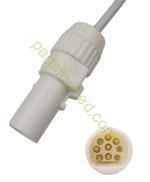
Reusable pediatric finger clip SpO2 Sensor for M&B patient monitors
$77
Found cheaper?
-
+
Buy in 1 click
Consult in WhatsApp 
The price is valid only for the online store and may differ from the prices in retail stores.
Description
Reusable pediatric finger clip SpO2 Sensor for M&B patient monitors
Part number U417-1CL
pediatric (15-40 kg),
clip type - "finger clip",
wire length - 3 m,
connector - 7 Pin
Reusable pulse oximeter sensor is designed to measure the level of saturation (oxygen saturation) of the patient's blood.
### Reusable Pediatric Finger Clip SpO2 Sensors: An In-Depth Technical Overview #### Introduction Pulse oximetry, an essential non-invasive monitoring technique, measures arterial blood oxygen saturation (SpO2) and pulse rate, two critical indicators of a patient’s respiratory function. For pediatric patients, these measurements necessitate specialized equipment due to their smaller anatomy and higher mobility. Reusable pediatric finger clip SpO2 sensors are designed to meet these specific needs, providing reliable, comfortable, and accurate readings while being cost-effective over time compared to disposable counterparts. #### Design Specifications 1. **Size and Fit**: - Pediatric finger clip SpO2 sensors are specifically sized to fit smaller fingers. The clip mechanism is designed to provide a gentle yet secure fit, preventing any undue pressure that could cause discomfort or impede circulation. - Adjustable or flexible designs to accommodate varying finger sizes within the pediatric age group, typically from infants to pre-teens. 2. **Materials**: - Constructed with biocompatible, hypoallergenic materials to avoid skin irritation or allergic reactions, essential for the sensitive skin of young patients. - The exterior is generally durable and easy to clean, often using medical-grade silicone or similar materials that are resistant to frequent sanitization procedures. 3. **Optical Components**: - Equipped with high-quality light-emitting diodes (LEDs) and photodetectors. The LEDs transmit red and infrared light through the finger, and the photodetectors measure the amount of light that has traversed the tissue. - These components are precisely calibrated to detect even subtle variations in oxygen saturation and pulse rate, which is critical given that pediatric patients have faster pulse rates and potentially smaller blood vessels. 4. **Cable and Connector**: - Reinforced cables to withstand frequent use and resist tangling or breakage. The cable length is balanced to allow necessary flexibility and range of motion while minimizing the risk of entanglement or interference. - Designed with universal connectors to ensure compatibility with a wide range of pulse oximetry monitors. This enables integration into various clinical settings, from emergency departments to neonatal intensive care units (NICUs). #### Functional Characteristics 1. **Precision and Accuracy**: - Pediatric sensors must operate accurately within a broad range of motions and activity levels typical in children. Advanced algorithms are employed to filter out motion artifacts and ambient light interference. - High resolution in detecting subtle changes in pulse rate and blood oxygen levels, with accuracy typically within ±2-3% for SpO2 and ±2 beats per minute for pulse rate. 2. **Response Time**: - Fast response times to rapidly changing physiological conditions. Real-time data acquisition processes provide immediate feedback to healthcare providers, which is critical in acute care situations. 3. **Durability and Reusability**: - Designed for longevity withstanding multiple patient uses over several years with routine sterilization. Reinforced pressure points and stress-relief areas in the cable reduce the likelihood of wear and tear. - Economic benefits due to lower per-use cost compared to disposable sensors. Environmentally friendly, reducing medical waste. #### Clinical Application and Utility 1. **Comfort and Patient Compliance**: - Enhanced comfort encourages patient compliance, reducing distress and movement which can lead to more stable and accurate readings. - Various color and design options can be used to make the sensors more appealing to children, further improving the likelihood of consistent monitoring. 2. **Integration with Healthcare Systems**: - Seamless compatibility with existing electronic health records (EHR) and monitoring systems. Data from the sensors can be continuously monitored, recorded, and analyzed in conjunction with other patient information. - Usability features such as error notifications, low battery indicators (if applicable), and clear display of readings ensure that healthcare providers can rely on these sensors in critical situations. 3. **User Training and Troubleshooting**: - Minimal training required for healthcare staff due to straightforward operation and universal design. Sensor interfaces are intuitively designed for quick onboarding. - Manuals and technical support are available to assist in troubleshooting and ensuring maximum sensor uptime and performance. #### Conclusion Reusable pediatric finger clip SpO2 sensors represent a sophisticated amalgamation of biomedical engineering and pediatric care needs. Their design prioritizes precision, durability, and patient comfort, making them indispensable tools in monitoring the vital signs of young patients. Continuous advancements in sensor technology and materials engineering promise even greater accuracy and ease of use in the future, reinforcing their critical role in pediatric healthcare.Ask a Question