
Inspire Innovations international limited.
Type the part number or keyword in the search box. If you do not know the catalog number, you can find the product by category or by manufacturer. To find a product by device model, first select the manufacturer.
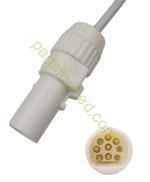
Reusable adult finger clip SpO2 Sensor for M&B patient monitors
$75
Found cheaper?
-
+
Buy in 1 click
Consult in WhatsApp 
The price is valid only for the online store and may differ from the prices in retail stores.
Description
Reusable adult finger clip SpO2 Sensor for M&B patient monitors
Part numbers U417-1AL
adult (more than 40 kg),
clip type - "finger clip",
wire length - 3 m,
connector - 7 Pin
Reusable pulse oximeter sensor is designed to measure the level of saturation (oxygen saturation) of the patient's blood.
# Reusable Adult Finger Clip SpO2 Sensor for Medical Use ## Introduction A Reusable Adult Finger Clip SpO2 Sensor is a non-invasive device designed to measure the oxygen saturation level (SpO2) and pulse rate of an adult patient. This device plays a critical role in monitoring respiratory status in various medical settings, including hospitals, clinics, and home healthcare. This document provides a detailed technical overview of the sensor, its design, functionality, and usage. ## Design and Construction ### Sensor Composition The sensor typically comprises the following components: 1. **Clip Body**: Made of medical-grade, hypoallergenic materials like silicone or ABS plastic, ensuring comfort and durability. 2. **Emitter and Detector**: Light-emitting diodes (LEDs) and photodiodes situated within the clip. 3. **Cabling**: Shielded cables for electrical connection, often insulated with a durable plastic or rubber sheath. 4. **Connector**: Interfaces with the monitoring system, usually via a plug or similar interface compatible with specific pulse oximeters. ### Physical Specifications - **Dimensions**: Designed to fit adult fingers, typically ranging from 14mm to 22mm in width. - **Weight**: Lightweight, usually around 50-80 grams, ensuring minimal strain on the patient. - **Flexibility**: The clip should open and close easily to accommodate different finger sizes while maintaining an optimal pressure to stay in place. ## Functionality ### Mechanism The sensor operates based on the principles of spectrophotometry. The LEDs emit light at two wavelengths: usually red (~660 nm) and infrared (~940 nm). These wavelengths correspond to the absorption peaks of oxyhemoglobin and deoxyhemoglobin in arterial blood. 1. **Emission**: The LEDs emit the specified wavelengths through the finger. 2. **Absorption**: The light is partially absorbed by the blood, tissues, and bones in the finger. 3. **Detection**: The photodiode on the opposite side of the clip detects the non-absorbed light. The sensor's circuitry calculates the ratio of absorbed light at each wavelength. This ratio is then converted into an oxygen saturation percentage, leveraging the Beer-Lambert law. ### Accuracy and Performance - **Oxygen Saturation Range**: Typically measures SpO2 from 70% to 100%. - **Pulse Rate Measurement Range**: 30 to 250 beats per minute (BPM). - **Accuracy**: - SpO2: ±2% in the range of 70% to 100%. - Pulse Rate: ±1 BPM or ±1%. ## Usage and Application ### Clinical Settings 1. **Hospital Wards**: Continuous monitoring of SpO2 in patients, particularly those with respiratory conditions or undergoing anesthesia. 2. **Emergency Rooms**: Rapid assessment of oxygen levels in critically ill patients. 3. **Outpatient Clinics**: Routine check-ups and acute assessments. ### Home Healthcare For patients with chronic conditions like COPD or sleep apnea, the sensor assists in daily monitoring, enabling timely medical interventions. ### Operation Instructions 1. **Preparation**: Ensure the patient's finger is clean and free from nail polish or any substances that might interfere with light transmission. 2. **Attachment**: Open the sensor clip and place it on the patient's finger, ensuring it's positioned correctly with the emitter above the nail bed. 3. **Connection**: Connect the sensor to the pulse oximeter device. 4. **Monitoring**: Initiate the measurement. The results usually stabilize within a few seconds. 5. **Data Interpretation**: Review the displayed SpO2 percentage and pulse rate. Observe for trends or abnormalities. ## Maintenance and Care 1. **Cleaning**: Clean the clip with a soft cloth dampened with a mild disinfectant solution. Avoid immersing the sensor completely in liquids. 2. **Storage**: Store in a cool, dry place away from direct sunlight. 3. **Inspection**: Regularly inspect for signs of wear and tear, especially the integrity of the cable and connector. Replace immediately if any damage is detected to ensure accurate readings and patient safety. ## Benefits and Advantages - **Reusability**: Reduces waste and long-term costs compared to disposable sensors. - **Reliability**: Provides consistent and accurate readings essential for effective patient monitoring. - **Comfort**: Ergonomic design ensures patient comfort during prolonged use. - **Compatibility**: Universally compatible with most standard pulse oximeters used in clinical settings. ## Conclusion The Reusable Adult Finger Clip SpO2 Sensor is an invaluable tool in modern healthcare, providing critical data for the assessment and monitoring of patient oxygenation and pulse rate. Its design prioritizes accuracy, durability, and comfort, making it suitable for frequent use in diverse medical environments. Proper care and usage ensure the longevity and reliability of the device, contributing significantly to patient care and management.Ask a Question