
Inspire Innovations international limited.
Type the part number or keyword in the search box. If you do not know the catalog number, you can find the product by category or by manufacturer. To find a product by device model, first select the manufacturer.
Battery M&B CD2000 for CD2000
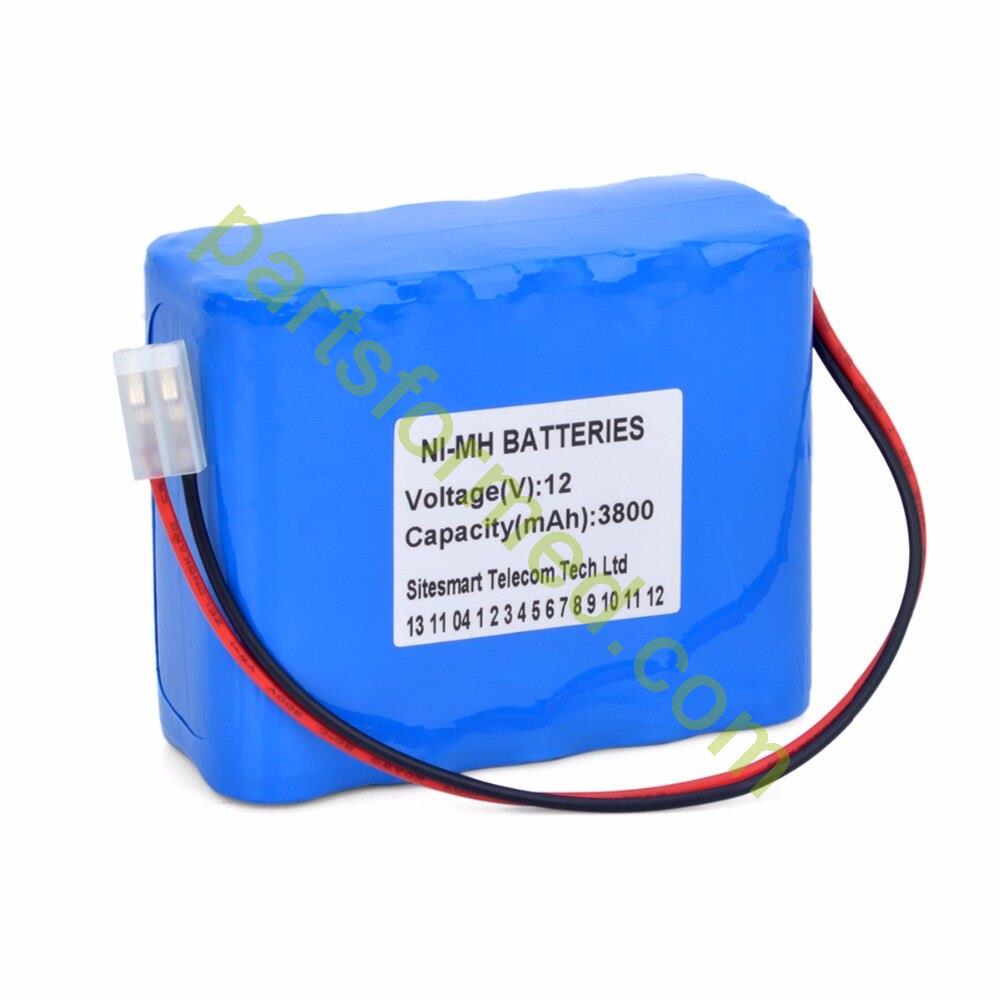

Battery M&B CD2000 for CD2000
Color: blue
Cell Quantity: 10
Cell Capacity: 3800
Type: NI-MH
Brand: China
Voltage: 12V
Capacity: 3800mAh
Weight (gr): 501
Dimensions (mm): 84*32*67
Battery M, also referred to as Magnesium-ion battery, represents a class of rechargeable batteries that utilize magnesium ions as the charge carriers. This technology has been the focus of considerable research due to its potential advantages over current lithium-ion batteries in terms of capacity, cost, safety, and environmental impact.
### Structure and Working Principle
#### Components:
- **Anode:** The anode in a Magnesium-ion battery typically consists of pure magnesium metal. Magnesium has a higher volumetric capacity compared to lithium, making it a promising choice for high-energy-density applications.
- **Cathode:** The cathode material can vary, but common choices include materials such as Chevrel phases (Mo6S8), transition metal oxides, and sulfides. These materials are selected based on their ability to reversibly intercalate magnesium ions.
- **Electrolyte:** The electrolyte is crucial for the efficient transport of magnesium ions between the anode and cathode. Most research has been focused on developing non-aqueous electrolytes that are compatible with magnesium metal, including magnesium salts dissolved in organic solvents or ionic liquids.
- **Separator:** The separator is a permeable membrane that physically separates the anode and cathode while allowing magnesium ions to pass through.
#### Electrochemical Mechanism:
The fundamental working principle involves the reversible intercalation/de-intercalation of magnesium ions during discharge and charge cycles:
1. **Discharge Process:** When the battery discharges, magnesium atoms at the anode oxidize to Mg?? ions, releasing two electrons for each magnesium atom. These Mg?? ions migrate through the electrolyte towards the cathode.
2. **Intercalation:** At the cathode, Mg?? ions are intercalated into the cathode material, pairing with electrons that have traveled through the external circuit.
3. **Charge Process:** During charging, the process is reversed. Mg?? ions de-intercalate from the cathode, migrate back through the electrolyte to the anode, and are reduced back to magnesium metal.
### Advantages
#### Safety:
Magnesium-ion batteries are considered safer than lithium-ion counterparts as magnesium metal is less reactive with the electrolyte, reducing the risk of dendrite formation. Dendrites are needle-like structures that can form on the anode during charge/discharge cycles and potentially cause short circuits.
#### Capacity and Energy Density:
Magnesium offers a significant theoretical volumetric capacity (3832 mAh/cm?) which is higher than that of lithium (2062 mAh/cm?). This attribute makes magnesium-ion batteries potentially capable of achieving higher energy densities.
#### Cost and Abundance:
Magnesium is the eighth most abundant element in the Earth's crust and is less expensive than lithium. This makes magnesium-ion batteries a cost-effective alternative potentially suitable for large-scale applications such as grid storage.
#### Environmental Impact:
The extraction and processing of magnesium are considered to have a lower environmental footprint compared to lithium. Additionally, recycling magnesium-ion batteries may pose fewer environmental hazards.
### Challenges and Current Research
Despite the advantages, several technical challenges need to be addressed before Magnesium-ion batteries can be commercially viable.
#### Electrolyte Compatibility:
Finding an electrolyte that is compatible with the magnesium anode while providing high ionic conductivity and stability against reduction/oxidation is a significant challenge.
#### Cathode Material:
Developing cathode materials that can efficiently and reversibly intercalate Mg?? ions remains an area of active research. Unlike lithium ions, magnesium ions are divalent and have higher charge density, leading to slower diffusion rates and requiring robust host materials.
#### Anode-Cathode Interface:
The interface between the anode and the electrolyte is critical. Over time, formation of passive layers can impede ion transport, affecting the battery's performance and longevity.
### Future Prospects
Continued research in material science, electrochemistry, and scalable manufacturing processes is essential to overcoming the current challenges faced by Magnesium-ion batteries. Advancements in nanotechnology and computational modeling are expected to play crucial roles in accelerating the development of suitable materials and improving overall battery performance.
In conclusion, Battery M holds significant promise for the future of energy storage technologies. Though still in the developmental phase, it offers a potential pathway toward safer, more efficient, and environmentally friendly batteries that could transform various industries, from consumer electronics to renewable energy storage.