
Inspire Innovations international limited.
Type the part number or keyword in the search box. If you do not know the catalog number, you can find the product by category or by manufacturer. To find a product by device model, first select the manufacturer.
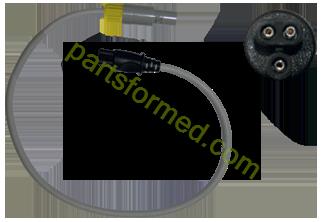
Fisher&Paykel Healthcare HWA-850F01
$189
Нашли дешевле?
-
+
Buy in 1 click
Consult in WhatsApp 
The price is valid only for the online store and may differ from the prices in retail stores.
Description
Certainly! Your request for detailed technical information about "Fisher" could refer to several different contexts, including Fisher information in statistics, Fisher's exact test, the Fisher equation in finance, or even Fisher in biological terms like the species of animals. Below, I'll detail Fisher Information in the context of statistics, which is a central concept in the field of statistical inference.
---
## Fisher Information: A Detailed Technical Overview
In the field of statistics, Fisher information (named after the eminent statistician Ronald A. Fisher) quantifies the amount of information that an observable random variable carries about an unknown parameter upon which the probability of the variable depends. It forms a cornerstone in the theory of statistical estimation and is pivotal in assessing the efficiency of estimators.
### Definition and Mathematical Formulation
The Fisher information associated with a parameter \(\theta\) in a parametric family of probability distributions can be formalized in several ways, commonly through either the score function or the second derivative of the log-likelihood function.
#### Score Function-Based Definition
Let \(X\) be a random variable with probability density function \(f(x; \theta)\), where \(\theta\) is the parameter. The score function \(U(\theta)\) is defined as the gradient (or derivative in one-dimensional cases) of the log-likelihood function:
\[ U(\theta) = \frac{\partial}{\partial \theta} \log f(X; \theta) \]
The Fisher information \(I(\theta)\) is then the variance of the score function:
\[ I(\theta) = \mathbb{E} \left[ \left( \frac{\partial}{\partial \theta} \log f(X; \theta) \right)^2 \right] \]
#### Log-Likelihood Second Derivative Definition
Alternatively, Fisher information can be defined through the expected value of the negative second derivative of the log-likelihood function with respect to the parameter:
\[ I(\theta) = -\mathbb{E} \left[ \frac{\partial^2}{\partial \theta^2} \log f(X; \theta) \right] \]
Both definitions are equivalent under regularity conditions that allow for the interchange of differentiation and expectation operations.
### Properties of Fisher Information
1. **Additivity**: For independent and identically distributed (i.i.d) random variables \(X_1, X_2, \ldots, X_n\) with common parameter \(\theta\), the Fisher information for the sample \(I_n(\theta)\) is the sum of the individual Fisher information values:
\[ I_n(\theta) = nI(\theta) \]
2. **Cramer-Rao Bound**: The Fisher information sets a lower bound on the variance of unbiased estimators. For an unbiased estimator \(\hat{\theta}\) of \(\theta\):
\[ \text{Var}(\hat{\theta}) \geq \frac{1}{I(\theta)} \]
This inequality provides a benchmark for estimator efficiency, indicating that no unbiased estimator can have a variance lower than the inverse of the Fisher information.
3. **Invariant under Reparametrization**: If the parameter \(\theta\) is reparametrized through a smooth function \(\phi = g(\theta)\), the Fisher information transforms as:
\[ I_\phi(\phi) = I_\theta(\theta) \left( \frac{d\theta}{d\phi} \right)^2 \]
### Applications in Statistical Inference
1. **Maximum Likelihood Estimation (MLE)**: Fisher information plays a critical role in the asymptotic properties of MLE. Under certain regularity conditions, the MLE \(\hat{\theta}\) for large samples is approximately normally distributed with mean \(\theta\) and variance \(\frac{1}{I(\theta)}\):
\[ \hat{\theta} \approx \mathcal{N} \left( \theta, \frac{1}{I(\theta)} \right) \]
2. **Hypothesis Testing**: In the context of hypothesis testing, the Fisher information is used to derive the information matrix, which is essential for the construction of test statistics like the likelihood ratio test.
3. **Confidence Intervals**: The precision of confidence intervals around parameter estimates can be gauged using the Fisher information, particularly in asymptotic settings.
### Practical Example
Consider a simple case of Fisher information calculation for the parameter \(\theta\) of a normal distribution with known variance \(\sigma^2\) and mean \(\theta\). The probability density function is:
\[ f(x; \theta) = \frac{1}{\sqrt{2\pi\sigma^2}} \exp\left( -\frac{(x - \theta)^2}{2\sigma^2} \right) \]
The log-likelihood function is:
\[ \log f(x; \theta) = -\frac{1}{2} \log (2\pi \sigma^2) - \frac{(x - \theta)^2}{2\sigma^2} \]
Taking the first derivative with respect to \(\theta\):
\[ \frac{\partial}{\partial \theta} \log f(x; \theta) = \frac{x - \theta}{\sigma^2} \]
Squaring this and taking the expectation, we obtain:
\[ \mathbb{E} \left[ \left( \frac{x - \theta}{\sigma^2} \right)^2 \right] = \frac{1}{\sigma^2} \]
Hence, the Fisher information \(I(\theta)\) for this normal distribution is:
\[ I(\theta) = \frac{1}{\sigma^2} \]
### Conclusion
Fisher information is an integral concept in statistics, providing critical insights into the precision and efficiency of parameter estimates. Its use permeates various domains, including parameter estimation, hypothesis testing, and the derivation of confidence intervals, underscoring its foundational role in statistical theory and application.
---
I hope this detailed technical overview addresses your interest in Fisher information in statistics. If you had a different context in mind, please let me know!
Ask a Question